What Is a Peptide? Definition, Structure, and Use in Research
In a nutshell. A peptide is a molecule made up of several amino acids linked together by peptide bonds. Conventionally, peptides are distinguished from proteins by their length: those with fewer than about 50 amino acids are called peptides, while those with more are called proteins. This smaller size gives it a simpler structure and makes it easier to synthesize chemically.
What exactly is a peptide?
A peptide is a chain of amino acids. Each amino acid has a carboxylic acid group and an amine group. When the carboxylic acid group of one amino acid reacts with the amine group of the next, a covalent bond called a peptide bond is formed, with the release of a water molecule.
Repeat this process, and you get a chain. This chain has a specific reading direction: it is always described from its N-terminal end (free amine) to its C-terminal end (free carboxyl group). The order of the amino acids in this chain is called the primary sequence, and it is this sequence that determines everything else: the molecule’s folding, its stability, and the receptors to which it is capable of binding.
Twenty proteinogenic amino acids are sufficient to build the essentials of life. A tripeptide like GHK contains only three—glycine, histidine, and lysine—and that is enough for it to form a stable complex with copper.
What is the difference between a peptide and a protein?
The difference is a matter of size, not a difference in chemical nature. Both are chains of amino acids linked in the same way.
| Term | Number of amino acids | Example |
|---|---|---|
| Dipeptide, tripeptide | 2 to 3 | GHK (3) |
| Oligopeptide | 2 to 20 | Epitalon (4), Selank (7), Semax (7), BPC-157 (15) |
| Polypeptide | 20 to 50 | Thymosin beta-4 (43) |
| Protein | more than 50 | Albumin (585) |
The 50-amino-acid threshold is arbitrary and debated. Insulin, with its 51 amino acids distributed across two chains, is sometimes described as a large peptide and sometimes as a small protein, depending on the author.
What matters in practice is something else: a protein adopts a complex and fragile three-dimensional structure, whereas a short peptide often remains flexible. Peptides are therefore easier to synthesize chemically, easier to purify, and easier to characterize by mass spectrometry.
How is a research peptide made?
The predominant method is solid-phase peptide synthesis (SPPS), developed by Robert Bruce Merrifield in 1963 and awarded the Nobel Prize in Chemistry in 1984.
The process consists of four repeated steps:
- The first amino acid is attached to an insoluble solid resin.
- Its amine group, protected by a chemical group, is deprotected.
- The next amino acid, which has been activated, forms the peptide bond.
- Excess reagents are removed by simply washing the resin.
The cycle repeats until the sequence is complete. The chain is then cleaved from the resin and purified by reverse-phase high-performance liquid chromatography (RP-HPLC).
This purification step is what distinguishes a usable research product from a useless powder. Each coupling cycle has a yield of less than 100%, resulting in truncated chains. Without thorough purification, the vial contains a mixture whose actual composition is unknown.
This is precisely why an independent certificate of analysis is not a marketing claim but an experimental fact. Without it, the actual concentration of your solution remains unknown.
Why are peptides delivered in lyophilized form?
In solution, a peptide degrades: hydrolysis of peptide bonds, oxidation of methionine and cysteine residues, and deamidation of asparagine and glutamine. Time and temperature accelerate all of these processes.
Freeze-drying removes water through sublimation, under vacuum and at low temperatures. What remains is a white powder or deposit—sometimes barely visible at the bottom of the vial—whose stability is measured in months or years rather than days.
This powder must be dissolved before use, a process that has its own set of guidelines. See our guide on reconstituting a lyophilized peptide and the reconstitution calculator to determine the volume of solvent.
One thing often comes as a surprise: the quantity listed on the label—for example, 10 mg—does not always correspond to the visible mass. A 10-mg deposit at the bottom of a glass vial represents a minuscule volume, and some of the powder may adhere to the cap during shipping. This is not a defect.
What families of peptides are found in research?
Peptides studied in the laboratory are grouped by their targeted signaling pathway rather than by chemical structure.
| Family | Pathway Studied | Examples of Compounds |
|---|---|---|
| Tissue repair | Angiogenesis, cell migration, extracellular matrix | BPC-157, TB-500, GHK-Cu |
| Metabolic | GLP-1, GIP, and glucagon receptors | Retatrutide, tirzepatide, semaglutide |
| Growth | GH axis, GHRH and ghrelin receptors | Ipamorelin, CJC-1295, semorelin |
| Longevity | Mitochondrial function, telomeres, oxidative stress | Epitalon, MOTS-c, SS-31, humanin |
| Neuro | Neurotrophins, BDNF, GABAergic modulation | Semax, Selank, DSIP |
| Immunity | Modulation of the immune response, antimicrobial peptides | Thymosin alpha-1, LL-37, KPV |
This classification is a navigational tool, not an official taxonomy. A single peptide frequently acts on multiple pathways.
How to evaluate the quality of a research peptide?
Four pieces of data, all of which must appear on a batch certificate of analysis:
- Chromatographic purity, measured by HPLC-UV, expressed as a percentage of area. This indicates what proportion of the detected peptide species corresponds to the expected compound.
- Identity, confirmed by mass spectrometry. The measured mass must match the theoretical mass calculated from the sequence.
- Net peptide content, often confused with purity, even though it is a different parameter. A vial may be listed as 99% pure but contain only 80% peptide by mass, with the remainder consisting of water and counterions.
- The issuing laboratory, which must be an independent third party not affiliated with the seller.
These four points are listed directly on the document. Our guide How to Read a Certificate of Analysis details each section, and all of our batch reports are available on the Certificates of Analysis page.
Key Takeaways
A peptide is a short chain of amino acids—simpler than a protein—that can be chemically synthesized and is delivered in lyophilized form to ensure long-term stability. Its experimental value depends not on its name but on three verifiable figures: purity, confirmed identity, and net peptide content. Everything else is just commentary.
To browse the catalog by family, see all research peptides.
Frequently asked questions
Are a peptide and a protein the same thing?
Chemically speaking, yes, both are chains of amino acids linked by peptide bonds. The distinction is a matter of convention and is based on length: chains with fewer than about 50 amino acids are called peptides, while those with more are called proteins.
Why does my bottle look empty?
A 5- to 10-mg freeze-dried powder occupies a very small volume and may form a translucent film at the bottom of the vial. Some of the powder may also adhere to the stopper during shipping. Briefly centrifuge or gently tap the vial before reconstituting it.
How long does a freeze-dried peptide last?
In freeze-dried form, when stored away from light and at low temperatures, stability is generally measured in months or even years, depending on the sequence. Once reconstituted, stability decreases significantly and is measured in days or weeks when refrigerated.
What does “99% purity” mean on a certificate?
This is the chromatographic purity measured by HPLC: 99% of the area of the detected peaks corresponds to the expected compound. It is not the mass of the peptide contained in the vial, which is a separate measurement known as the net peptide content.
Are research peptides intended for human use?
No. The compounds sold by PeptidAs are strictly intended for in vitro laboratory research. They are not intended for human consumption, veterinary use, diagnosis, or treatment.
Sources cited
- Merrifield RB. Solid-Phase Peptide Synthesis. I. The Synthesis of a Tetrapeptide. Journal of the American Chemical Society, 1963.
- Lau JL, Dunn MK. Therapeutic peptides: Historical perspectives, current development trends, and future directions. Bioorganic & Medicinal Chemistry, 2018.
- Manning MC et al. Stability of Protein Pharmaceuticals: An Update. Pharmaceutical Research, 2010.
Compounds mentioned in this article
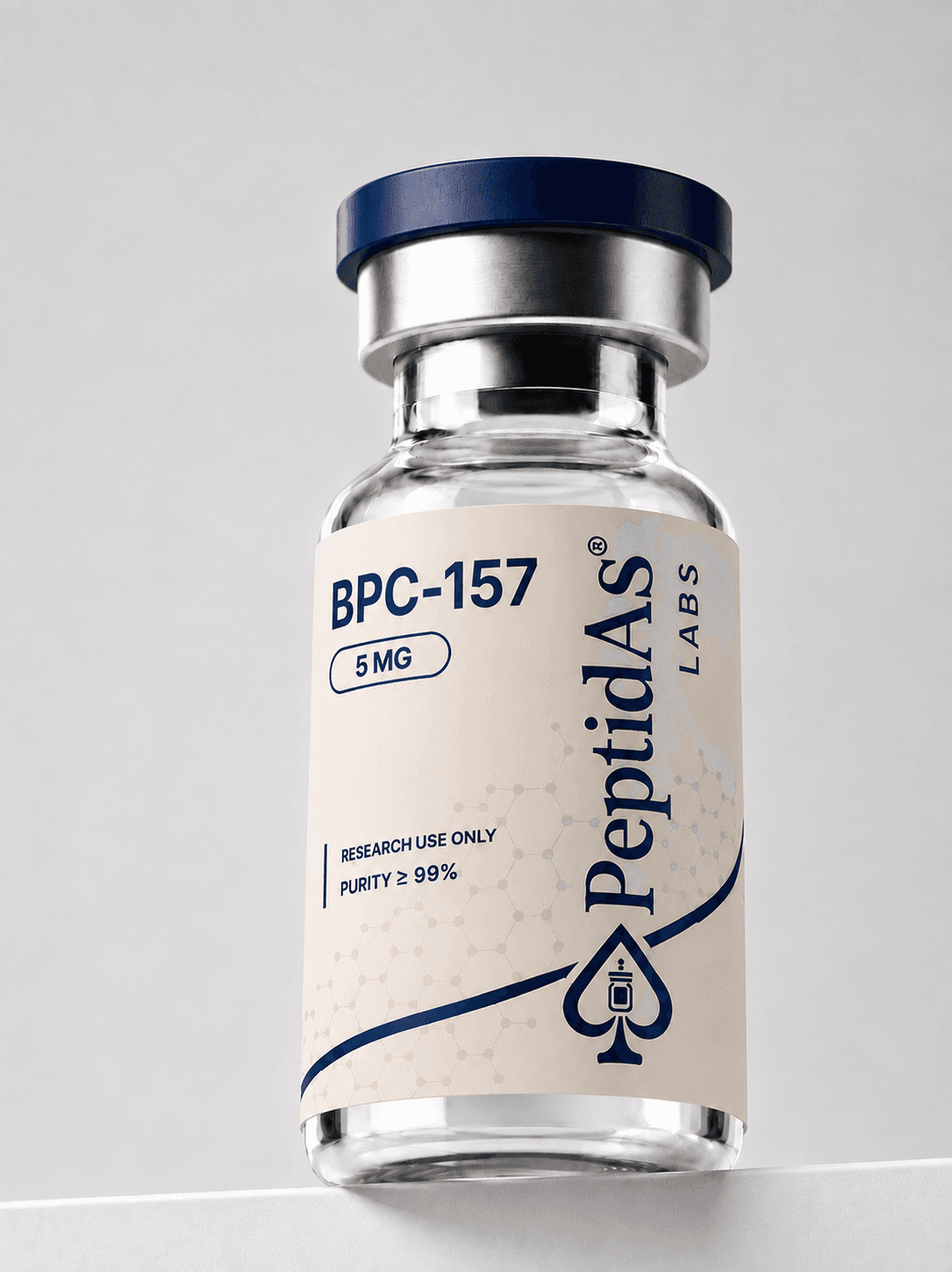
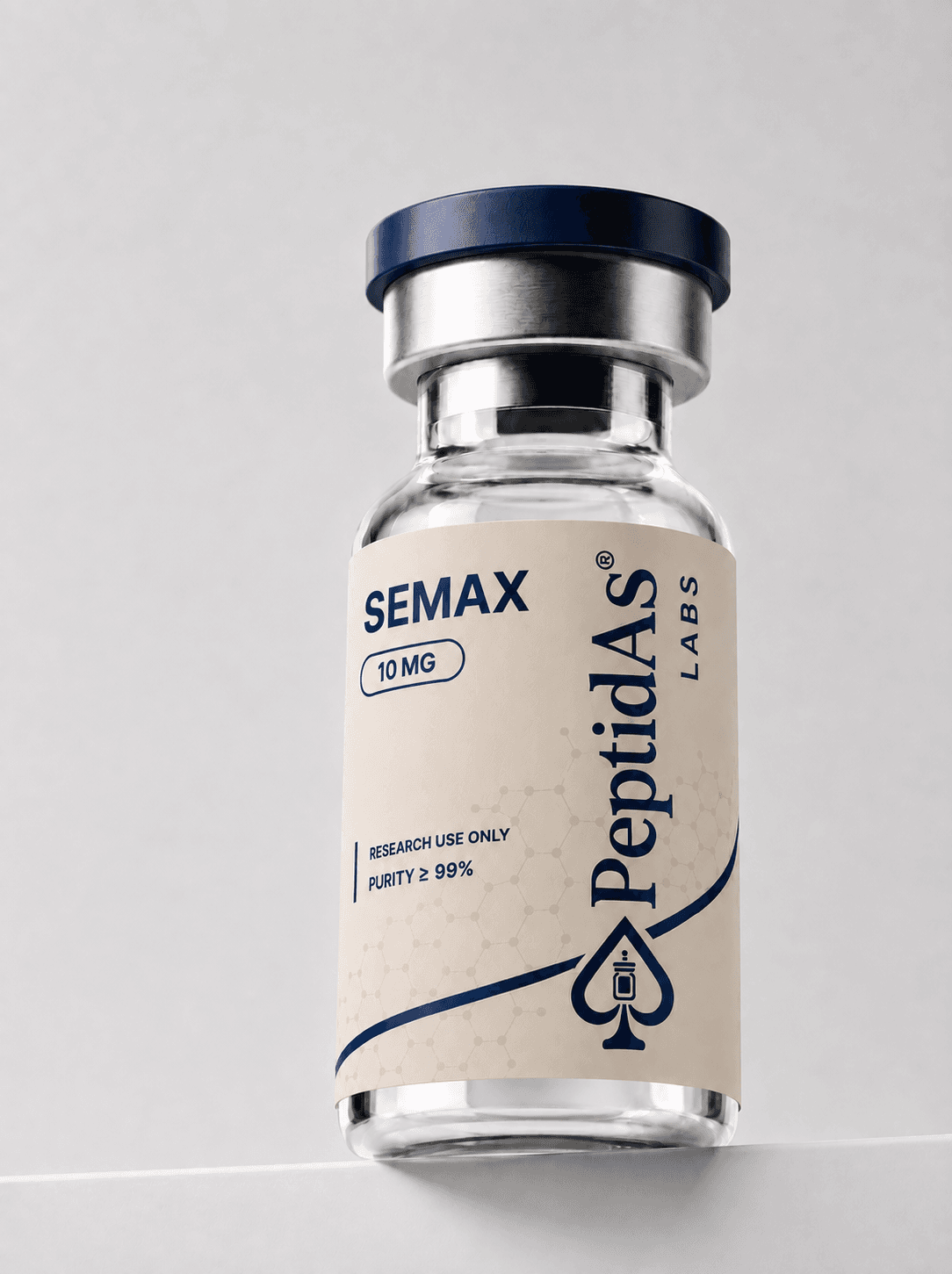
The research products mentioned above.
Read also
What Is Retatrutide? An Explanation of the Triple Agonist
Retatrutide is the first peptide to simultaneously activate three metabolic receptors. This is what sets it apart from tirzepatide and semaglutide, and this is what the published literature actually reports.
What Is GHK-Cu? An Explanation of the Copper Tripeptide
Discovered in human plasma in 1973, GHK-Cu is one of the most extensively studied peptides in skin research. Its structure, its complex with copper, and what the literature actually says.
How to Reconstitute a Lyophilized Peptide in the Laboratory
Dissolving a lyophilized peptide is the step where the most batches are lost. Choosing the solvent, calculating the concentration, proper procedures, and mistakes that ruin a vial.